Titel
Brussels FutureTalks: AI in vocational education and training
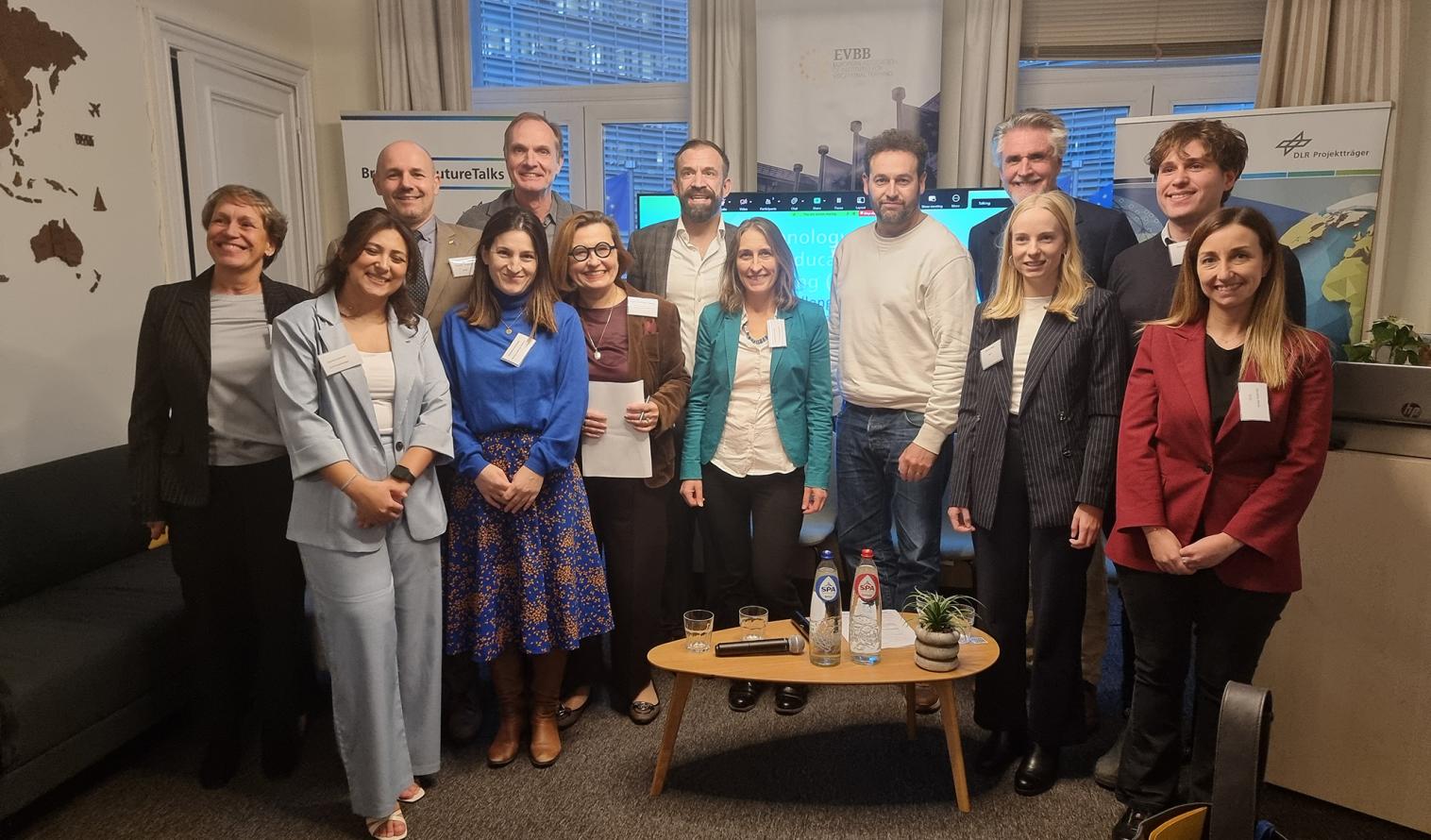
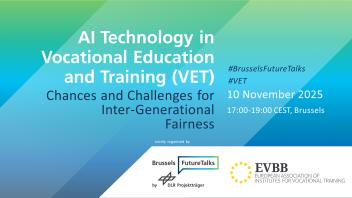
11th November 2025 — The 11th edition of the Brussels FutureTalks sparked a lively intergenerational dialogue on artificial intelligence in vocational education and training (VET). The event took place at the invitation of DLR Projektträger (DLR-PT) and the European Association of Institutes for Vocational Training (EVBB) in the EVBB's “VET House”.
The hosts set the tone: AI must not replace humans, but should complement human judgement, creativity and social skills. Klaus Uckel, Chairman of the DLR-PT Executive Board, emphasised that education and responsible AI are inextricably linked – and that algorithms can never replace the social dimension of learning. EVBB Secretary General Theodor Grassos argued that strong European networks are crucial for using AI in the interests of quality, participation and sustainability.
EU institutions also made their positions clear at the event: The European Commission, represented by Andrea Leruste from the Directorate-General for Employment, Social Affairs and Inclusion (DG EMPL), sees AI as the engine of the Union of Skills – a tool that is intended to personalise learning paths, improve the transition to work and enable new professions. The prerequisite for this is fair and inclusive access for all learners. Sabrina Repp, Member of the European Parliament, emphasised that vocational education and training is not just a labour market tool, but a pillar of democracy. AI must help to strengthen participation – no one should be left behind on the path to the digital future.
A particular highlight of the evening was the panel of young experts. Their demand: “Nothing about us without us.” Young people want to be actively involved in AI regulation, vocational training policy and the design of learning and work processes. AI should not be an instrument of power, but should contribute to fair opportunities for all.
The discussion made it clear that intergenerational dialogue is important in all key education policy issues, in questions of inclusion and lifelong learning, in the creation of localised, needs-oriented AI solutions and also in the establishment of trust in discussions between the donor generations – an element that Ms Astrid Fischer, member of the Executive Board of DLR-PT, underlined in her summary.
Europe needs places and structures where generations can work together to develop AI-based solutions for the future. AI can only strengthen vocational training if young people are permanently at the table.

We need trust in the professional experiences of today and their relevance for future generations; we should make this trust tangible through a common European framework for intergenerational vocational education and training.

The European Commission's forthcoming VET Strategy and the Union of Skills initiative offer a unique opportunity to integrate these considerations into education policy and, in particular, into the design of VET in Europe – embedding AI skills and empowering civic participation as two pillars of resilience and competitiveness.