
Titel
Developing strategies for resilient scientific cooperation worldwide

In December 2025, researchers, diplomats and decision-makers from politics, business and society gathered in Copenhagen for the Second European Science Diplomacy Conference. The event was hosted by the European Commission in collaboration with the Danish Presidency of the Council of the European Union. DLR Projektträger was entrusted with organising the conference under the Global Service Facility framework agreement. The participants discussed how international collaboration in research and development can succeed in times of growing geopolitical tension.
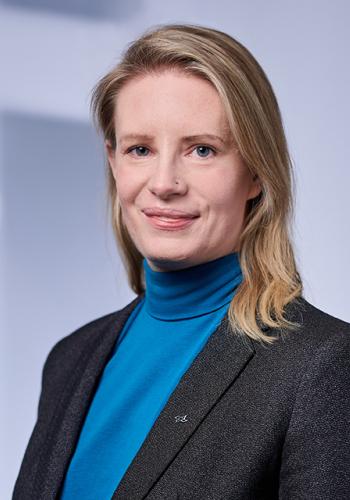
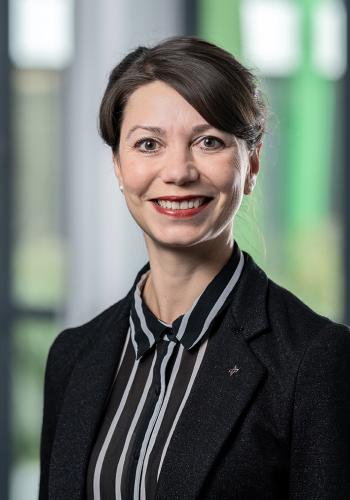
Ms Josten, how would you describe the current state of international cooperation between science and policy?
Maria Josten: In Copenhagen, you could really sense how much the international research landscape has changed in recent years. Due to global competition – with China, for example – the need to protect knowledge is becoming increasingly relevant. At the same time, global crises such as pandemics or climate change demonstrate that these challenges can only be addressed when science and policymaking work hand in hand. At the conference, for instance, experts from the diplomatic community discussed with scientists how research can remain open to international cooperation despite geopolitical tensions.
These discussions often refer to terms such as Science Diplomacy, Science Advice and Research Security. What do they mean, and how are they related?
Katharina Höne: Science Diplomacy has been an established term for more than 15 years, describing the intersection of international science and politics. In recent years, however – in the face of new geopolitical challenges – Science Diplomacy has gained further significance and has become more multifaceted. The term describes both scientific advice as part of political decisions and the role of science in building bridges during times of geopolitical tension. At the same time, Science Diplomacy sets the political and diplomatic framework for scientific cooperation.
Science Advice, in this sense, plays a key role within Science Diplomacy – and has become increasingly relevant in an age of misinformation. It ensures that political decisions are grounded in scientific evidence. Research Security, in turn, protects research results from unauthorised access from abroad. All three terms are interconnected today, because international cooperation between states and the scientific community can only succeed in the long term if it is open, evidence-based and, at the same time, protected. This intersection is precisely where the work of the DLR Projektträger comes in.
What role does Science Advice play in your work – and what are the main challenges when it comes to bridging science and politics?
Josten: In recent years in particular, we have observed that governments are increasingly seeking scientific advice. Spain, for example, has appointed 22 scientists to strengthen cooperation between the government, universities and research centres. For us, supporting capacity building in this field is an important priority. For instance, we have developed a ‘From Science to Policy’ curriculum for the United Nations Environment Programme. Together with partners from the European Union Science Diplomacy Alliance, we have developed eleven modules that demonstrate how scientific findings can be used for political decision-making in an understandable and effective manner – covering everything from the role of science in politics and analysing obstacles to building the necessary mindset.
Höne: Another example of the relevance of Science Advice is the COVID-19 pandemic. It has demonstrated how important international data sharing and clear communication are – both to policymakers and to the general public. There is a great need for developing the necessary skills: in our training sessions, we repeatedly find that the relationship between research and politics is characterised by mutual misunderstandings. We therefore train participants from both professional fields together and explain how they can communicate complex political and scientific knowledge concisely – a key skill for interaction between science and politics.

„In our training sessions, we repeatedly find that the relationship between research and politics is characterised by mutual misunderstandings. We therefore train participants from both professional fields together and explain how they can communicate complex political and scientific knowledge concisely.“
You’ve already mentioned: Research Security is playing an increasingly important role. Doesn’t this conflict with open science? Does DLR Projektträger have a solution to offer in this regard as well?
Josten: Academic freedom remains a core value, as it is crucial for innovation and progress – but it requires safeguarding mechanisms to prevent abuse through intellectual property theft or the unauthorised leakage of data. Technologies with dual-use potential – such as AI or biotechnology – could be used for the benefit or detriment of society. That is why the principle of ‘as open as possible, as closed as necessary’ applies in Europe. In this context, we advise organisations from the scientific, political and business communities on how best to assess when and to what extent exchange in sensitive scientific areas is appropriate, as well as which precautions might be necessary.
„Academic freedom remains a core value, as it is crucial for innovation and progress – but it requires safeguarding mechanisms to prevent abuse through intellectual property theft or the unauthorised leakage of data.“
How do international researchers deal with changing demands related to new technologies?
Höne: This is where the term ‘Tech Diplomacy’ comes into play. It describes the responsible dialogue between states and major tech companies such as Meta and Google, which are exerting ever greater influence on our society. This dialogue focuses on risks, values and the impact on the development of technologies and innovations. Denmark was a pioneer in the field of Tech Diplomacy: As early as 2017, the country became the first in the world to appoint a tech ambassador. Other countries are following suit, such as Austria and Brazil. Together with the Asia-Europe Foundation, we have run a training course on Tech Diplomacy for young decision-makers from Asia and Europe. In our training sessions, we explain how the combination of openness, protection and responsibility can be successfully achieved in practice.
How do you specifically support funding organisations, research institutions and government departments in identifying the opportunities and risks of international collaborations?
Höne: DLR Projektträger has developed a comprehensive toolkit for this purpose. The online tool OPERATE guides users through a series of structured questions to assess both the opportunities and risks of a collaboration – from vetting potential partners to technology analysis. This enables the users to better estimate the added value of a collaboration and gain confidence in their decision-making. In addition, our colleagues offer training in several languages, featuring interactive scenarios and self-assessments. On the Safeguarding Science platform, we also demonstrate how countries such as Canada, the Netherlands and the UK define and implement actions in the field of Research Security. This allows our partners to learn from established approaches.
What sets DLR Projektträger’s consultancy services apart?
Josten: Firstly, we cover all three areas – Science Diplomacy, Science Advice and Research Security, both individually and in an integrated manner. Secondly, for us, consultancy means support: we find the right approach for each target group, be it a workshop, training session or a holistic strategy process – and then we work together to jointly develop solutions that suit the specific situation. And thirdly: what sets us apart is expertise drawn from international practice. We collaborate with partners in more than 130 countries and we are active in numerous research networks. Furthermore, we continuously monitor and evaluate current developments in the three thematic fields. On this basis, we incorporate knowledge from conferences and our own research and evaluations directly into our work.
Can you give some current examples?
Höne: We are currently conducting a study in Central Asia on behalf of the European Commission. Here, we are investigating how Science Diplomacy is implemented in this region. Together with European partners, we have developed the first free online course on Science Diplomacy in Europe within the framework of an EU project. It covers the fundamentals, methods and practical examples – and is now used by more than 6,000 participants worldwide. We are also a founding member of the European Union Science Diplomacy Alliance and lead its task force on capacity building, i.e. the development of knowledge and skills. Here, we exchange views with our European colleagues on current developments and coordinate activities.
„Technological change is happening very rapidly, and it is therefore worthwhile for science, business, politics and diplomacy to keep track of disruptive developments. Strategic Foresight is our most important tool for supporting our clients on crucial future issues.“
Looking ahead is also crucial. How is DLR Projektträger preparing its partners for future challenges?
Josten: Topics such as AI, raw material shortages, climate change and geopolitical tensions demand Strategic Foresight. Furthermore, technological change is happening very rapidly, and it is therefore worthwhile for science, business, politics and diplomacy to keep track of disruptive developments. Strategic Foresight is our most important tool for supporting our clients on crucial future issues. We analyse trends, anticipate potential scenarios and identify possible actions. For example, as part of the EU project ‘Linking Ukraine to the European Research Area’, we are currently supporting scientists from Ukraine in shaping their international research cooperation and agenda. On behalf of the Federal Foreign Office, we also conducted a three-day foresight seminar for European diplomats. Participants explored Europe’s future role in foreign policy. With these initiatives, international cooperation remains forward-looking, resilient, and innovative — even amid turbulent times
 Linkedin
 Xing
Xing
 Facebook
 X
X