
The Social-Ecological Research funding-priority at DLR Projektträger

Major transformation processes present challenges for our society: for example the transition to a sustainable green economy, the shift towards a climate-neutral energy system, and the consistent alignment of urban development with sustainability goals . These challenges can only be addressed if ecological, economic, and social objectives are considered in a balanced and integrated way. Research on large-scale sustainability transformations therefore cannot be carried out by a single scientific discipline — or by academia alone. Decisive is the merging of diverse forms of knowledge to develop practical solutions that improve quality of life and strengthen societal resilience. The particular strength of Social-Ecological Research therefore is integrating and applying knowledge from different disciplines, as well as from both perspectives, research and real-world practice – based on a shared understanding of problems. At the Social-Ecological Research Department of DLR Projektträger, we develop, design and manage research programs. Furthermore, we provide policy advice. Transdisciplinary sustainability research enables researchers to cooperate with policymakers, public administrations, businesses, NGOs, and citizens to identify the best solutions for a sustainable future.

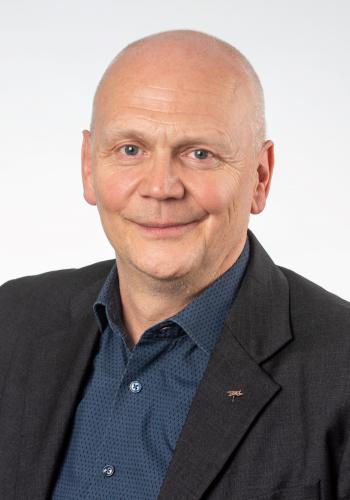
“Social-Ecological Research is uniquely positioned to develop knowledge-based solutions to the major challenges of our time through collaboration built on trust, because solutions can only be truly sustainable when all relevant interconnections are taken into account and all groups within society are involved.”
Participation from the very beginning
A key foundation of Social-Ecological Research is the use of innovative participatory methods that actively involve the public, municipalities, companies, and civil society organizations in transformation processes such as the mobility and energy transitions.
In Social-Ecological Research projects, all stakeholders are involved in the research process right from the outset. They actively contribute to shaping the research in a transdisciplinary manner. One example is the use of so-called “real-world laboratories”: this is where researchers and practitioners collaborate in open-outcome processes to test and develop sustainable, future-oriented solutions in realistic settings. The DLR-PT offers a comprehensive portfolio of services for different approaches of ‘participation’.
Thematic Spectrum of Social Ecological Research
The projects supported by the Social Ecological Research Department cover an impressive range of topics, including:
- Sustainable development of cities and regions
- Innovative mobility concepts for the cities of tomorrow
- Sustainability in academia
- Valuing and safeguarding biodiversity in politics, business, and society
- Sustainable business practices and sustainable consumption
In addition, junior research groups within Social-Ecological Research focus on urgent emerging research needs and adress an outstanding diverse range of topics. Through projects on the European stage, DLR Projektträger is also advancing transformative research internationally.
Practical Example: The Mobility Transition
Since 2018, the BMBF (now BMFTR) research agenda “Sustainable Urban Mobility” has served as the starting point for a wide range of funding measures and projects aimed at advancing the mobility transition at the municipal level in Germany. The agenda was co-developed by the Social Ecological Research Department at DLR Projektträger on behalf of the ministry.
One example is the NaMoLi project, funded in the “MobilitätsWerkStadt 2025” initiative. What once was housing for U.S. military personnel in the Lincoln district on the outskirts of Darmstadt has now been transformed into a forward-looking urban neighborhood through the BMFTR-funded NaMoLi project. Due to an innovative mobility concept, developed and implemented through continuous participation by local residents, the district now offers numerous sustainable mobility services. These services enable around 1,000 residents to remain mobile without owning a private car. This is why the project has won multiple awards.
Our Services in Transdisciplinary Sustainability Research
Strategic consulting

For our clients, we:
- identify current research needs and organize expert discussions
- develop new thematic fields in sustainable urban and regional development
- create strategic partnerships with relevant stakeholders
- support the institutionalization of transdisciplinary research through our network
Designing funding instruments
For our clients, we:
- develop tailored funding guidelines for transdisciplinary sustainability research
- provide extensive experience with a wide range of funding instruments and give advice on favourable selection and implementation
- review proposals and organize (transdisciplinary) evaluation processes
Analyses, studies, and evaluations
For our clients, we:
- analyze the current state of science and research funding
- evaluate studies and monitor current societal developments
- assess and evaluate funding programs
Communication and dialogue processes
For our clients, we:
- design participatory agenda-setting processes, expert dialogues, and more
- create both digital and in-person spaces for networking and capacity building
- provide regular, target-group-oriented updates on developments within the funding-priority area
Funding management
For our clients, we:
- offer specialized expertise in managing projects involving both academic and practice-based partners
- provide a comprehensive end-to-end service covering administrative management and scientific support — from proposal submission through to the final report.

Further links
 Linkedin
 Xing
Xing
 Facebook
 X
X